Play therapy utilizes engaging activities, often documented in PDF guides, to help children express emotions and develop coping mechanisms․
These resources offer therapists structured approaches for facilitating healing and growth through play, fostering a safe and supportive environment․
What is Play Therapy?
Play therapy is a distinct form of psychotherapy specifically tailored for children, leveraging play as its primary medium of communication․ Unlike traditional talk therapy, it allows children to process their feelings and experiences in a natural, comfortable way․ Many resources, including readily available PDF guides, detail various techniques and activities․
These PDFs often showcase how play isn’t merely recreation; it’s a child’s language and a powerful tool for therapists․ Through carefully selected activities – building, art, rhythm-based play, and object interactions – therapists observe and interpret a child’s expressions, behaviors, and underlying emotional states․ The goal is to help children understand and resolve their psychosocial challenges, promoting emotional well-being and healthy development․
The Importance of Play in Child Development
Play is fundamentally crucial for a child’s holistic development, fostering cognitive, emotional, social, and physical growth․ It’s through play that children learn problem-solving skills, negotiate social interactions, and express complex emotions – all vital components of healthy maturation․ Numerous PDF resources on play therapy activities emphasize this foundational role․
These guides highlight how structured play, within a therapeutic context, can address specific developmental needs․ Activities like construction play, detailed in many PDFs, build hand-eye coordination and problem-solving․ Play provides a safe space for experimentation and emotional release, allowing children to navigate challenges and build resilience․ Understanding this importance is key to effective therapeutic intervention․

Core Play Therapy Techniques
Play therapy employs both directive and non-directive approaches, detailed in PDF guides, to facilitate emotional expression and healing through structured activities․
Non-Directive Play Therapy
Non-directive play therapy centers around the child’s lead, allowing them to freely choose activities and express themselves without therapist intervention․ Many PDF resources detail this approach, emphasizing the therapist’s role as a facilitator, observing and reflecting the child’s feelings․
This technique trusts the child’s innate ability to explore their inner world through play, utilizing toys and materials as symbolic representations of their experiences․ Therapists using this method avoid directing the play, instead focusing on building a trusting relationship and providing a safe space for emotional release; PDF guides often include case studies illustrating how subtle observations can unlock deeper understanding of the child’s challenges and promote self-discovery through spontaneous play․
Directive Play Therapy
Directive play therapy involves the therapist taking a more active role, suggesting specific activities and guiding the child’s play to address targeted goals․ Numerous PDF resources outline structured play interventions designed to facilitate emotional expression and skill-building․
Unlike non-directive approaches, directive therapy utilizes pre-planned activities, such as storytelling or role-playing, to help children process trauma, manage anger, or improve social skills․ PDF guides often provide detailed instructions for implementing these activities, including suggested prompts and interpretations․ This method is particularly useful when addressing specific behavioral issues or when a child struggles to initiate play independently, offering a focused and goal-oriented therapeutic experience․

Specific Play Therapy Activities
Play therapy activities, often found in PDF formats, encompass building, art, and rhythm-based techniques to promote emotional growth and self-expression․
Building and Construction Play
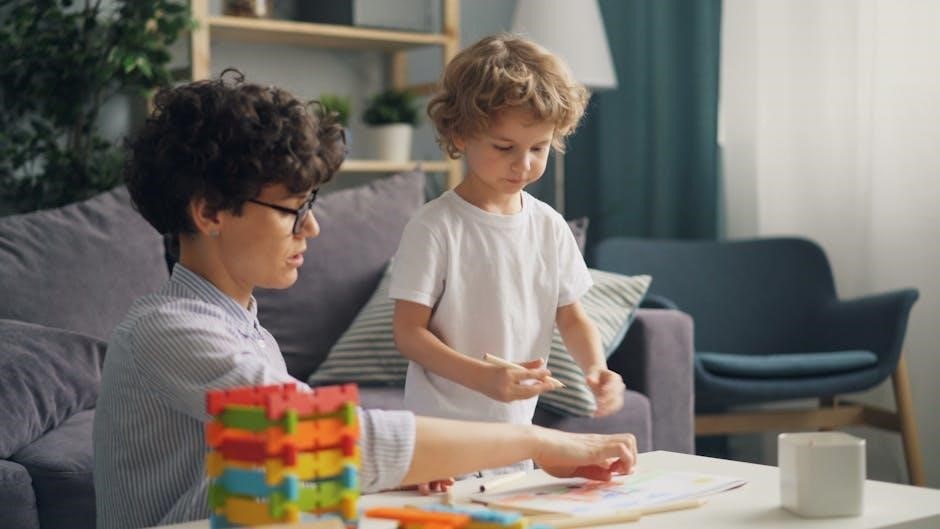
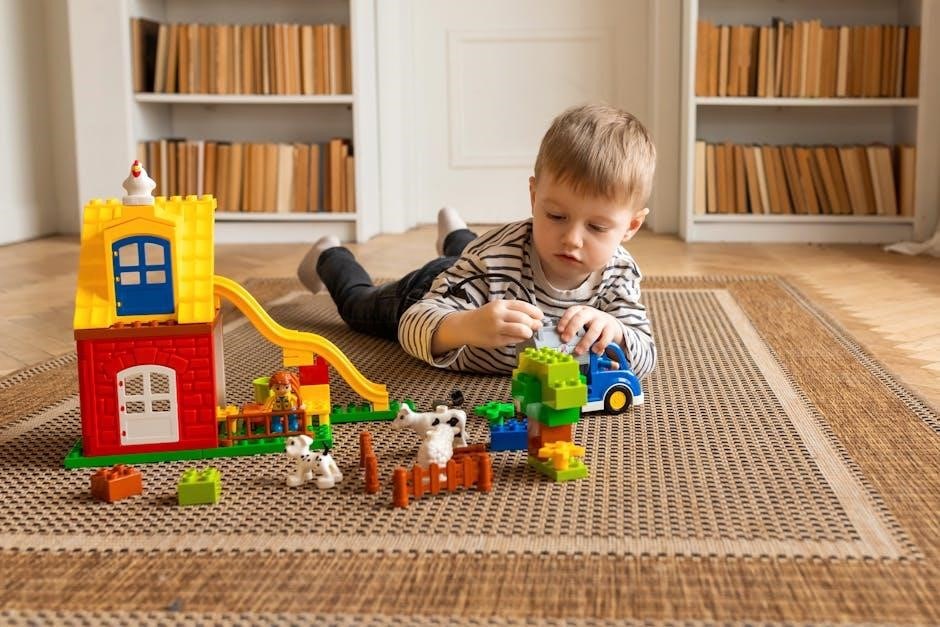
Building and construction play, detailed in many play therapy activities PDF guides, offers a powerful medium for children to explore their inner worlds․ Utilizing blocks or other construction toys, children develop crucial problem-solving skills and enhance hand-eye coordination․
The act of creating structures allows preschoolers, in particular, to safely explore and express a wide range of emotions․ Therapists can carefully observe behavioral patterns during this play, gaining valuable insights into the child’s emotional state and underlying concerns․

These activities provide a non-threatening way for children to externalize feelings and work through challenges, fostering emotional regulation and resilience․ PDF resources often include suggested prompts and interpretations for therapists․
Developing Problem-Solving Skills
Play therapy activities PDF resources frequently highlight building and construction play as a key method for fostering problem-solving abilities in children․ As children construct towers, bridges, or imaginative structures, they naturally encounter challenges requiring creative solutions․
These activities encourage children to think critically, plan strategically, and adapt to unexpected obstacles․ Therapists can observe how children approach these challenges, offering gentle guidance and support when needed․
Successfully overcoming these hurdles builds confidence and reinforces the child’s belief in their own capabilities․ PDF guides often suggest specific building prompts designed to target particular problem-solving skills․
Emotional Expression through Structures
Play therapy activities PDF materials emphasize that the structures children create during building play are rarely just about the physical construction; they are often symbolic representations of inner feelings and experiences․ A towering castle might represent a desire for protection, while a collapsed structure could reflect feelings of sadness or vulnerability․
Therapists utilizing these techniques observe the child’s choices – the materials used, the design of the structure, and any narratives accompanying the play – to gain insights into their emotional world․

PDF guides suggest prompting children to describe their creations and the feelings associated with them, facilitating emotional expression and processing․
Art Therapy Activities
Play therapy activities PDF resources highlight art as a powerful medium for non-verbal expression, particularly for children struggling to articulate their feelings․ Activities often include drawing, painting, and sculpting with materials like play-doh․ A common technique detailed in these guides involves having the child draw family members, not realistically, but as symbols representing their perceived relationships and emotions․
Using play-doh to represent family members offers a tactile and malleable way to explore dynamics․
These PDF guides emphasize that the process of creation is more important than the final product, allowing for safe emotional release․
Drawing Family Members as Symbols
Play therapy activities PDF guides frequently feature the “Family Drawing” technique․ This involves asking the child to draw each family member as a symbol – an object, animal, or abstract shape – rather than a realistic portrait․ The therapist then explores the child’s choices, seeking insights into their perceptions of each family member and the relationships between them․
For example, a large, strong symbol might represent a dominant figure, while a small or hidden symbol could indicate feelings of insignificance or distance․
These PDFs stress that interpretation should be collaborative, focusing on the child’s narrative․
Using Play-Doh to Represent Family
Many play therapy activities PDF resources include utilizing Play-Doh to represent family members․ This non-verbal approach allows children to express feelings and perceptions without the pressure of direct communication․ The child creates a Play-Doh figure for each family member, focusing on size, shape, color, and placement relative to others․
Therapists observe how the child manipulates the Play-Doh, noting any aggressive or gentle handling․
PDF guides emphasize processing the child’s creations, asking about their choices and the relationships depicted, fostering self-expression and understanding․
Rhythm-Based Play Therapy
Play therapy activities PDF guides frequently incorporate rhythm-based techniques to address fluency and speech rate challenges․ These activities leverage the predictable structure of rhythm to build confidence and improve verbal responses․ A common adaptation of the classic “Telephone Game” involves whisper-singing or gently tapping out a rhythm in a circle․
This encourages imitation, recall, and turn-taking skills․
PDF resources highlight how these structured exercises provide a foundation for verbal expression, particularly beneficial for children needing support with speech development or anxiety around communication․
The Telephone Game Adaptation
Play therapy activities PDF resources detail a modified “Telephone Game” ideal for group settings, focusing on imitation, recall, and essential turn-taking skills․ Instead of whispered words, participants whisper-sing or gently tap out a pre-selected rhythm to the next person in the circle․
This adaptation is particularly useful for children working on fluency and speech rate, offering a structured and predictable foundation for verbal responses․
PDF guides emphasize observing how children engage with the rhythm, noting any hesitations or difficulties, providing valuable insights for targeted intervention․
Improving Fluency and Speech Rate
Play therapy activities PDF guides highlight rhythm-based techniques, like the Telephone Game adaptation, as beneficial for addressing fluency and speech rate challenges․ The structured and predictable nature of these activities provides a secure foundation for verbal expression․
By engaging in rhythmic imitation and turn-taking, children can practice controlled speech patterns and build confidence in their communication abilities․
PDF resources often suggest varying the complexity of the rhythms to gradually increase the challenge, fostering incremental improvements in fluency and speech rate over time․
Coin and Ball Play
Play therapy activities PDF resources detail coin and ball play as a versatile technique promoting interaction and emotional exploration․ This activity involves hiding coins and then “digging” them up, often utilizing balls as containers or tools․
PDF guides suggest variations, including partner play where children trade balls and hidden coins, fostering turn-taking and collaborative problem-solving skills․
Therapists can observe how children approach the task – their persistence, frustration tolerance, and interaction style – gaining valuable insights into their emotional landscape․ These observations are often documented within the PDF session notes․
Hiding and Digging Activities
Play therapy activities PDF materials frequently showcase hiding and digging as a core component of coin and ball play․ This technique allows children to symbolically “bury” and then recover emotions or experiences․
PDF guides emphasize observing the child’s approach: Do they hide coins carefully or haphazardly? How persistent are they in digging? These actions reveal underlying feelings․
The act of hiding can represent suppression, while digging symbolizes the process of uncovering and processing emotions․ Therapists document these observations in session notes within the PDF, using it to guide further exploration․
Partner Interaction and Turn-Taking
Play therapy activities PDF resources often detail coin and ball play as a powerful tool for fostering social skills․ Specifically, the activity encourages partner interaction and turn-taking, crucial for developing healthy relationships․
PDF guides suggest variations where partners create, hide, and then trade balls with hidden coins inside․ This promotes negotiation, sharing, and respecting boundaries․
Observing how children navigate these interactions – whether they readily share or struggle with turn-taking – provides valuable insights․ Therapists document these observations within the PDF session notes, informing treatment plans and addressing potential social-emotional challenges․

Play Therapy for Emotional Regulation
Play therapy activities PDF guides provide techniques for managing emotions like anger and anxiety, offering structured play to build self-regulation skills․
Activities for Anger Management
Play therapy activities PDF resources frequently include techniques designed to help children process and manage anger constructively․ These often involve expressive mediums, allowing for safe emotional release․ For instance, children might engage in activities like squeezing and manipulating play-doh, symbolically representing their feelings of frustration or rage․
Other activities involve building and then intentionally dismantling structures, providing a physical outlet for pent-up anger․ Therapists utilizing these techniques, as detailed in various PDF guides, emphasize processing the emotions during and after the activity․ Discussion focuses on identifying triggers, recognizing physical sensations associated with anger, and developing alternative coping strategies․ The goal isn’t to eliminate anger, but to teach healthy expression and regulation․
Activities for Anxiety Reduction
Play therapy activities PDF guides often feature calming and grounding exercises to address childhood anxiety․ These techniques aim to create a sense of safety and control for the child․ One common approach involves guided imagery, where the therapist leads the child through a relaxing visualization, often detailed within the PDF resources․
Another effective method utilizes repetitive, rhythmic play, such as gently tapping out patterns or engaging in simple, predictable games․ These activities can soothe the nervous system and reduce feelings of overwhelm․ Furthermore, building and construction play, as outlined in many guides, allows children to create a secure and manageable world․ Processing the anxieties experienced during play is crucial, helping children identify and verbalize their fears․

Creating a Supportive Play Therapy Environment
Play therapy activities PDF resources emphasize building trust and rapport, alongside clear boundaries, to ensure a safe space for emotional exploration․
Establishing Trust and Rapport
Establishing trust and rapport is foundational in play therapy, and play therapy activities PDF guides often highlight this crucial first step․ A nurturing environment encourages children to freely express themselves without fear of judgment․ Therapists achieve this through consistent presence, active listening, and empathetic responses during play sessions․
Utilizing predictable routines and clearly defined boundaries, as suggested in various resources, further enhances a child’s sense of safety․ The therapist’s genuine warmth and acceptance, demonstrated through attentive engagement with the child’s chosen activities, are paramount․ PDF guides often detail techniques for mirroring a child’s play or offering gentle encouragement, fostering a strong therapeutic alliance․
This initial connection is vital for successful exploration of emotions and development of coping skills․
Setting Clear Boundaries and Routines
Play therapy activities PDF resources consistently emphasize the importance of establishing clear boundaries and routines to create a secure therapeutic space․ Predictability minimizes anxiety and allows children to focus on emotional exploration through play․ Boundaries define acceptable behaviors, ensuring both the child’s and therapist’s safety․
Consistent routines, such as a defined start and end to sessions, and clear expectations regarding toy usage, provide a sense of control․ These structures, detailed in many guides, help children regulate their emotions and understand consequences․
Boundaries aren’t restrictive but rather supportive, fostering self-regulation and responsible behavior within the play environment․ A well-structured session maximizes therapeutic benefits․
Resources for Play Therapy Activities (PDFs)
Play therapy activities PDFs from sources like Mosaic Way Counseling and Thriving at Home Telehealth offer therapists valuable, structured guidance and activity ideas․
Finding Reputable Sources
Locating trustworthy play therapy activity PDFs requires careful consideration․ Prioritize resources created by licensed and experienced play therapists or organizations dedicated to mental health․ Websites like Therapy Source and Mosaic Way Counseling provide valuable, evidence-based materials․
Always assess the source’s credentials and ensure the activities align with ethical guidelines․ Look for PDFs that clearly outline the therapeutic goals, target age groups, and necessary materials․ Be cautious of free, unverified resources, as their quality can vary significantly․
Reputable sources often include disclaimers emphasizing that these activities are supplementary tools and should be used within a professional therapeutic relationship․ Thoroughly review any PDF before implementation to ensure it suits your client’s specific needs and circumstances․
Utilizing Online Play Therapy Activity Guides
Online play therapy activity guides in PDF format offer a convenient and accessible resource for therapists․ Platforms like Rooted Rhythm Therapy and Thriving at Home Telehealth showcase diverse techniques, including drawing family symbols with Play-Doh or coin and ball play․
These guides often detail activity setup, processing questions, and adaptations for different age groups․ Remember to critically evaluate the content, ensuring it aligns with your therapeutic approach and the client’s needs․
Downloadable PDFs allow for easy printing and organization, facilitating session planning․ However, always prioritize ethical considerations and professional judgment when implementing any online activity․

Adapting Activities for Different Age Groups
Play therapy activities, often found in PDF guides, require modification based on developmental stage; construction play suits preschoolers, while older children benefit from complex tasks․
Preschoolers
Play therapy activities for preschoolers, readily available in PDF formats, should prioritize simplicity and sensory exploration․ Construction play with blocks is incredibly beneficial, fostering problem-solving skills and emotional expression through the structures they create․ Therapists can observe how a child builds – is it chaotic or carefully planned? – gaining insights into their emotional state․
Art therapy, utilizing drawing or Play-Doh, allows non-verbal communication․ Asking a preschooler to represent family members as symbols, or to sculpt them from Play-Doh, can reveal their perceptions and feelings towards each family member․ These PDF resources often suggest focusing on the process, not the product, encouraging free expression and minimizing judgment․ Rhythm-based activities, like adapted telephone games, can also be introduced, focusing on imitation and turn-taking in a playful manner․
School-Aged Children
Play therapy activities for school-aged children, often detailed in accessible PDF guides, can be more complex and goal-oriented․ Building and construction play continues to be valuable, now focusing on collaborative projects and more intricate problem-solving․ Coin and ball play, with hiding and digging elements, encourages partner interaction and turn-taking skills, fostering social-emotional development․
Art therapy can evolve to include more narrative elements; children can draw family dynamics or express feelings through symbolic artwork․ Therapists utilizing PDF resources will find suggestions for processing these creations, exploring underlying themes and emotions․ Rhythm-based games, like the telephone game adaptation, can improve fluency and speech rate, while also building focus and attention․