Arkansas Ant Identification Guide ー Article Plan (02/02/2026 07:49:17)
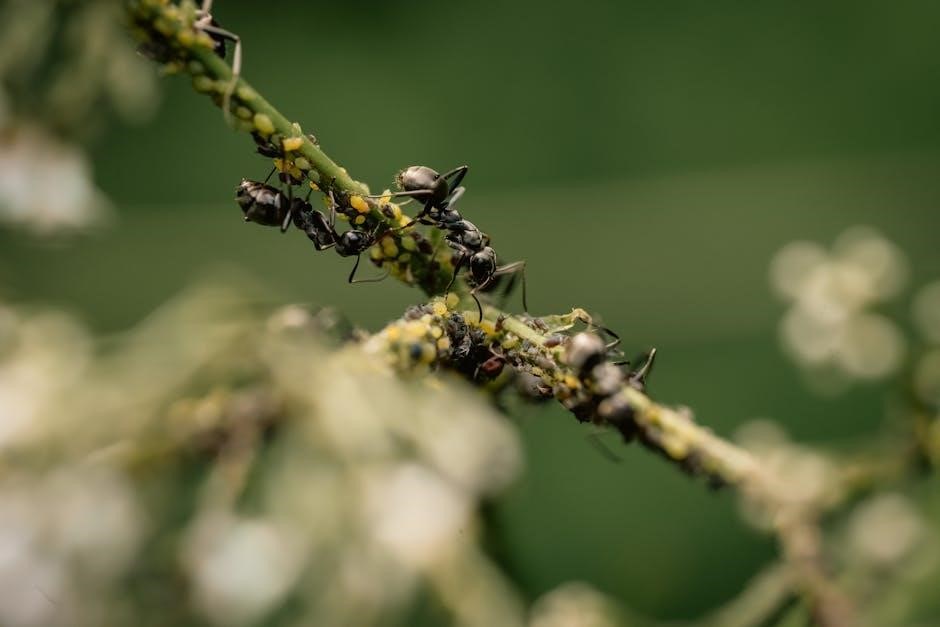
This guide details common Arkansas ants, aiding identification for homeowners, gardeners, and enthusiasts. Understanding species is key to effective control, especially during peak season.
Arkansas hosts diverse ant species, from carpenter ants to nuisance pests like Brachymyrmex patagonicus. Identification is crucial for targeted control, particularly in spring and summer.
Why Ant Identification Matters
Accurate ant identification is paramount for effective pest management in Arkansas. Different species exhibit varying behaviors and preferences, demanding tailored control strategies. For instance, carpenter ants target wood, while others are attracted to sweets or proteins.
Misidentification can lead to ineffective treatments, wasted resources, and prolonged infestations. Knowing whether you’re dealing with a harmless nuisance ant or a structurally damaging species like the Eastern Black Carpenter Ant dictates the appropriate course of action.
Furthermore, understanding an ant’s nesting habits – whether in soil, wood, or structures – informs preventative measures. Proper identification empowers homeowners and professionals to implement targeted solutions, ensuring long-term ant control success.
Ant Season in Arkansas: Spring & Summer
Spring and summer represent peak activity for ants across Arkansas. Warmer temperatures stimulate foraging, reproduction, and colony expansion, leading to increased sightings within homes and gardens. As the weather heats up, ants actively seek food and water sources, often venturing indoors in search of sustenance.
This period coincides with increased outdoor activities, bringing humans into closer contact with ant colonies. The surge in ant populations can be particularly noticeable after rainfall, as displaced colonies seek drier ground.
Understanding this seasonal pattern is crucial for proactive ant control. Implementing preventative measures during spring can minimize infestations throughout the warmer months.
Arkansas’s Diverse Natural Regions & Ant Distribution
Arkansas boasts seven distinct natural regions: the Ozark and Ouachita Mountains, Arkansas River Valley, Gulf Coastal Plain, Crowleys Ridge, the Arkansas Delta, and Central Arkansas. These varied landscapes influence ant distribution, with species adapting to specific environmental conditions.
For example, carpenter ants thrive in forested areas of the Ozarks and Ouachitas, utilizing decaying wood for nesting. Soil-nesting species are prevalent in the Delta’s fertile grounds. The Gulf Coastal Plain supports a diverse range of ant communities due to its warmer climate and varied habitats.
Understanding regional variations aids in accurate identification and targeted control strategies.
Common Arkansas Ant Species
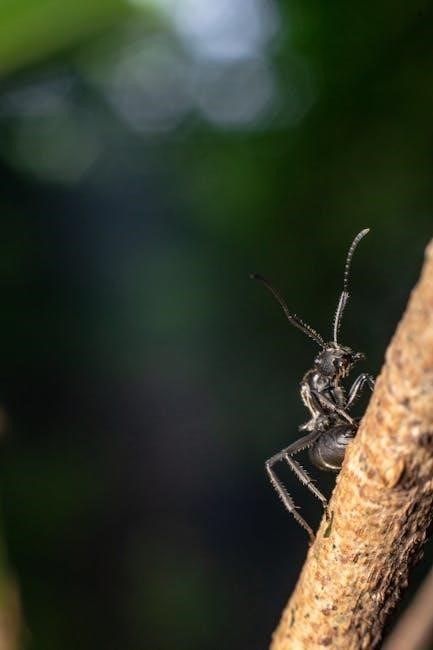
Arkansas hosts numerous ant species, including Carpenter Ants, Roger Ants, Mayr Ants, Argentine Ants, and Fitch Ants, each with unique characteristics and behaviors.
Eastern Black Carpenter Ant (Camponotus pennsylvanicus)
Eastern Black Carpenter Ant (Camponotus pennsylvanicus)
These large ants, typically 1/4 to 1/2 inch long, are glossy black and are common household and structural pests in Arkansas. Unlike carpenter bees, they don’t eat wood; instead, they excavate it to create nests, often in damp or decaying timber.
Colonies can be quite large, containing several thousand individuals. They prefer to nest in hollow trees, wall voids, and insulation. Finding smooth, clean tunnels within wood is a key indicator of their presence. They forage for honeydew, plant juices, and insects, sometimes becoming a nuisance indoors while searching for food sources. Control often requires locating and eliminating the nest, which can be challenging due to their hidden nesting habits.
Aphaenogaster fulva (Roger Ant)
The Roger Ant, measuring around 1/8 inch, is reddish-orange and an occasional structural pest, particularly in rotting wood. These ants are frequently found nesting outdoors, but may venture inside seeking food, especially sweets. They are known to establish colonies within decaying wood, creating noticeable galleries.
While not as destructive as carpenter ants, their presence can indicate moisture issues. They are often encountered in gardens and around foundations. Control focuses on eliminating access points and addressing moisture problems. They are not typically aggressive but can become a nuisance when foraging indoors. Proper sanitation and sealing cracks are crucial preventative measures.
Aphaenogaster lamellidens (Mayr Ant)
The Mayr Ant, Aphaenogaster lamellidens, is another reddish-brown ant, approximately 1/8 inch in length, and is known to nest in rotting wood structures. Like the Roger Ant, they aren’t major structural threats, but their presence signals potential wood decay. They are commonly found nesting within the wood of fences, decks, and even building components.
These ants forage for food both indoors and outdoors, and while not aggressive, can become a nuisance. Control strategies involve addressing moisture issues, removing decaying wood, and sealing entry points. Preventative measures include maintaining a dry environment and regular inspections for wood damage. They are part of Arkansas’s diverse ant fauna.
Brachymyrmex patagonicus (Argentine Ant ー Introduced)
Brachymyrmex patagonicus, the Argentine Ant, is an introduced species considered a nuisance pest in Arkansas. These small, dark brown ants are typically 1/16 inch long and form massive colonies with multiple queens, making eradication difficult. They readily invade homes seeking food and water, often trailing along pipes and wires.
Argentine Ants displace native ant species and can be particularly problematic due to their large numbers. Control requires a multi-faceted approach, including baiting, sealing entry points, and eliminating food sources. Their adaptability and reproductive capacity make professional pest control often necessary for effective management within Arkansas homes.
Camponotus americanus (Mayr Ant)
Camponotus americanus, commonly known as the Mayr Ant, is an occasional household and nuisance pest found throughout Arkansas. These ants are relatively large, ranging from ¼ to ½ inch in length, and are typically black in color. They prefer nesting in decaying wood but can also establish colonies within wall voids or structural timbers.
While not as destructive as carpenter ants, Mayr Ants can cause minor structural damage. They are attracted to sweets and proteins, often foraging for food inside homes. Control strategies involve locating and eliminating the nest, along with implementing preventative measures to seal entry points and maintain cleanliness.
Camponotus caryae (Fitch Ant)
Camponotus caryae, or the Fitch Ant, is recognized as an occasional structural pest within Arkansas. These ants, similar in size to the Mayr Ant (¼ to ½ inch), are generally black but can exhibit reddish hues. They demonstrate a preference for nesting in decaying wood, often found in stumps, logs, or within the wooden structures of homes.
Fitch Ants aren’t typically aggressive but can become a nuisance when foraging for food. Control efforts focus on identifying and removing the nest, alongside preventative measures like sealing cracks and maintaining a clean environment. Their presence warrants inspection for potential structural issues.
Camponotus castaneus (Latreille Ant)
Camponotus castaneus, commonly known as the Latreille Ant, is another carpenter ant species occasionally encountered as a household and nuisance pest in Arkansas. These ants, ranging in size from ¼ to ½ inch, are typically dark brown to black. They establish colonies within decaying wood, similar to other Camponotus species, but can also infest sound wood under certain conditions.
While not as destructive as some carpenter ants, their presence indicates potential moisture issues or wood decay. Control strategies involve locating and eliminating the nest, alongside preventative measures to reduce attractants and entry points. Regular home inspections are crucial.
Identifying Ant Characteristics
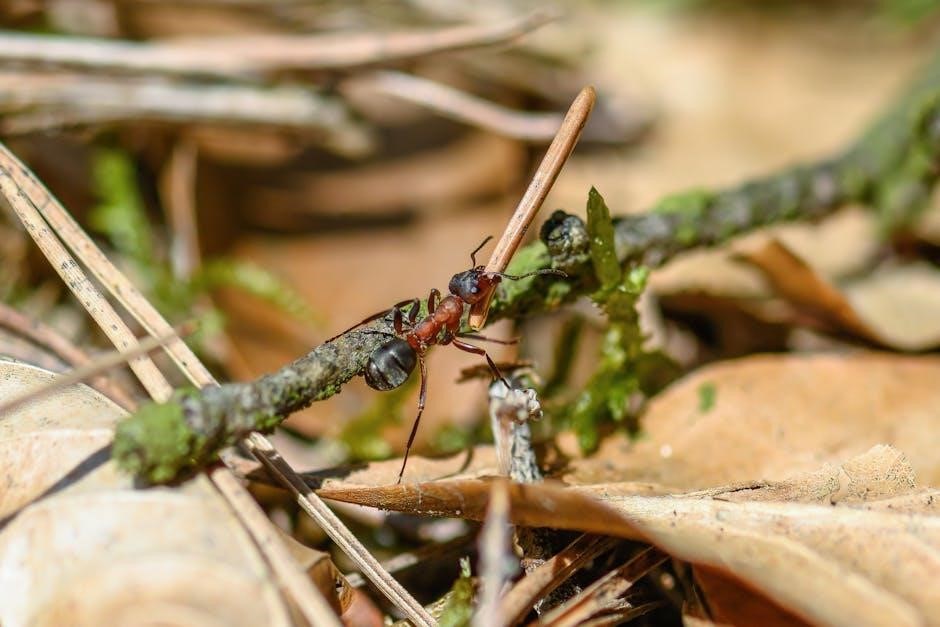
Accurate identification relies on observing size, color, and behavior. Distinguishing workers, queens, and males is vital for understanding colony dynamics and control.
Ant Size and Color Variations
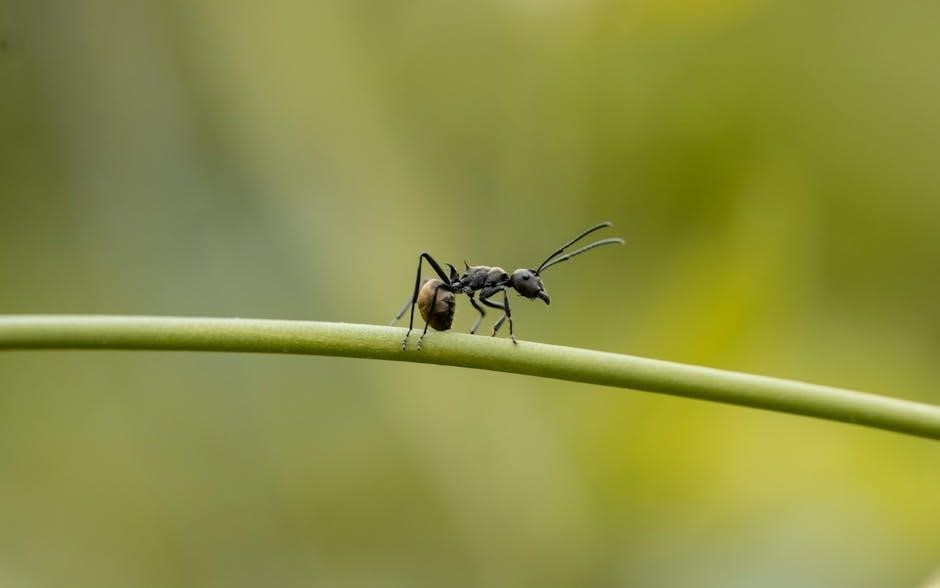
Ants exhibit remarkable diversity in size and coloration across Arkansas species. Worker ants, typically the most observed, range significantly in length – from tiny Brachymyrmex patagonicus, barely exceeding 1mm, to larger carpenter ants (Camponotus) reaching up to 25mm. Coloration is equally varied, encompassing shades of black, brown, reddish-brown, and even yellowish hues.
The Eastern Black Carpenter Ant, as its name suggests, is predominantly black. Aphaenogaster species often display reddish-brown or dark brown tones. Color can sometimes vary within a single species based on caste (worker, queen, male) or age. Observing these subtle differences, alongside size, is crucial for narrowing down potential identifications. Accurate measurement and detailed color notes are valuable when seeking expert assistance.
Distinguishing Workers, Queens, and Males
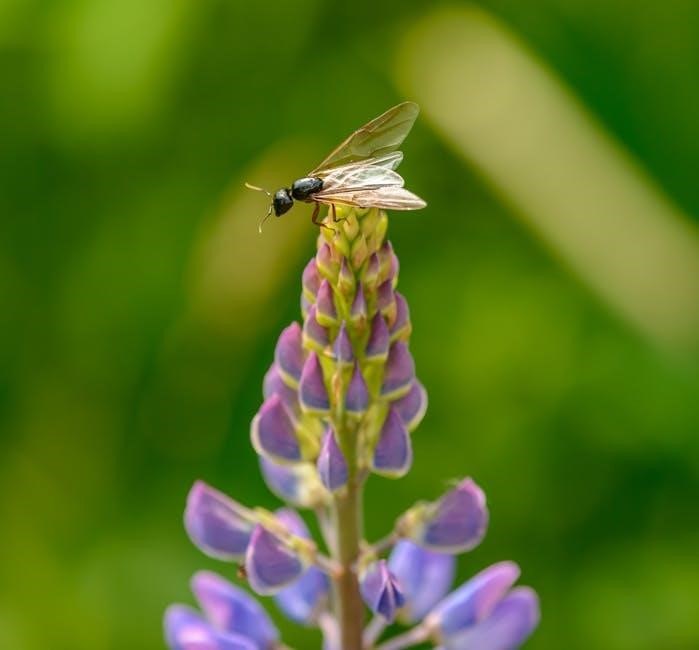
Identifying ant castes – workers, queens, and males – is vital for understanding colony dynamics and accurate species identification. Workers are typically the smallest and most numerous, responsible for foraging and nest maintenance. Queens are significantly larger, possessing a broader thorax and functional reproductive organs, often with wings (removed after mating).
Males, appearing during mating season, are usually smaller than queens but larger than workers, and are characterized by wings and more slender bodies. Wing presence or absence is a key differentiator. Observing these physical distinctions helps determine the ant’s role within the colony. Not all species exhibit obvious differences, making precise identification challenging without expert knowledge;
Observing Ant Behavior: Trails & Nesting Habits
Ant behavior provides crucial clues for identification and control. Observe trail patterns – consistent routes indicate established foraging paths. Carpenter ants often create smooth, well-defined trails. Note nesting locations; some species prefer wood, while others nest in soil or decaying matter.
Different species exhibit unique nesting preferences. Argentine ants, for example, often establish colonies in moist environments. Understanding these habits helps pinpoint nest locations and implement targeted treatments. Observing foraging preferences – what they’re eating – can also narrow down the species. Consistent observation of these behaviors aids in effective pest management strategies.
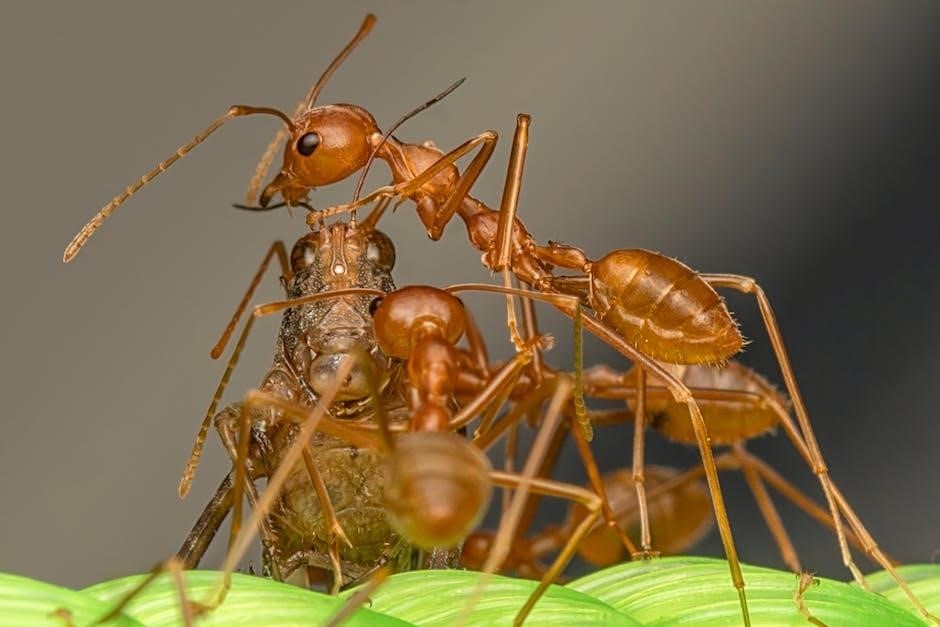
Ant Nest Locations in Arkansas
Arkansas ants nest in diverse locations: wood, soil, and decaying structures. Carpenter ants favor wood, while others prefer soil or rotting materials for colonies.
Nesting in Wood (Carpenter Ants)
Carpenter ants, notably the Eastern Black Carpenter Ant (Camponotus pennsylvanicus), are notorious for excavating wood to create their nests. Unlike termites, they don’t consume the wood; instead, they hollow it out, creating smooth galleries. This behavior can cause structural damage to homes and other wooden structures over time.
These ants typically prefer damp or decaying wood, making areas like leaky roofs, poorly ventilated attics, and wood in contact with the soil prime nesting sites. Identifying carpenter ant activity often involves finding piles of “frass” – a sawdust-like material they eject from their tunnels. Homeowners should inspect wooden components regularly for signs of damage and potential infestations, especially in areas prone to moisture.
Soil Nesting Ants
Many Arkansas ant species, such as Aphaenogaster fulva (Roger Ant) and Aphaenogaster lamellidens (Mayr Ant), commonly establish nests directly in the soil. These nests can vary in size, ranging from small colonies with a few dozen individuals to large, complex networks housing thousands of ants.
Soil nests are often found in lawns, gardens, and along foundations. They frequently utilize existing cavities or create their own underground chambers. Disturbed soil, small mounds, or noticeable ant trails leading to specific areas can indicate the presence of a soil-nesting colony. While generally not causing structural damage, their presence can be a nuisance, particularly when foraging for food near homes.
Nesting in Rotting Wood & Structures
Several Arkansas ant species exhibit a preference for nesting within decaying wood, both outdoors and inside structures. The Eastern Black Carpenter Ant (Camponotus pennsylvanicus) is a prime example, excavating galleries within wood for nesting, though they don’t consume it like termites.
Aphaenogaster lamellidens (Mayr Ant) may also utilize rotting wood in structures. This behavior can lead to structural concerns over time as the wood is weakened. Identifying these nests often involves locating frass (wood shavings) near entry points or observing ant activity around damp or damaged wood. Addressing moisture issues and removing decaying wood are crucial preventative measures.
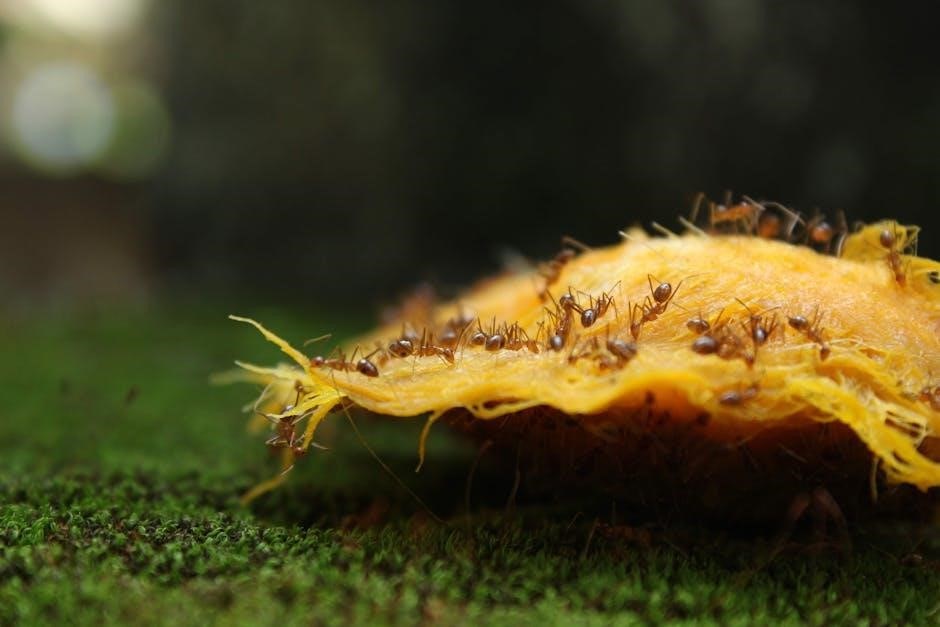
Ant Control & Prevention
Effective ant control requires species-specific strategies, sealing entry points, and maintaining cleanliness. Professional pest control offers targeted solutions for persistent infestations.
Targeted Strategies Based on Species
Successfully managing ant problems in Arkansas hinges on correctly identifying the species present and then implementing tailored control methods. For example, carpenter ants, nesting in wood, require different approaches than nuisance ants like Brachymyrmex patagonicus.
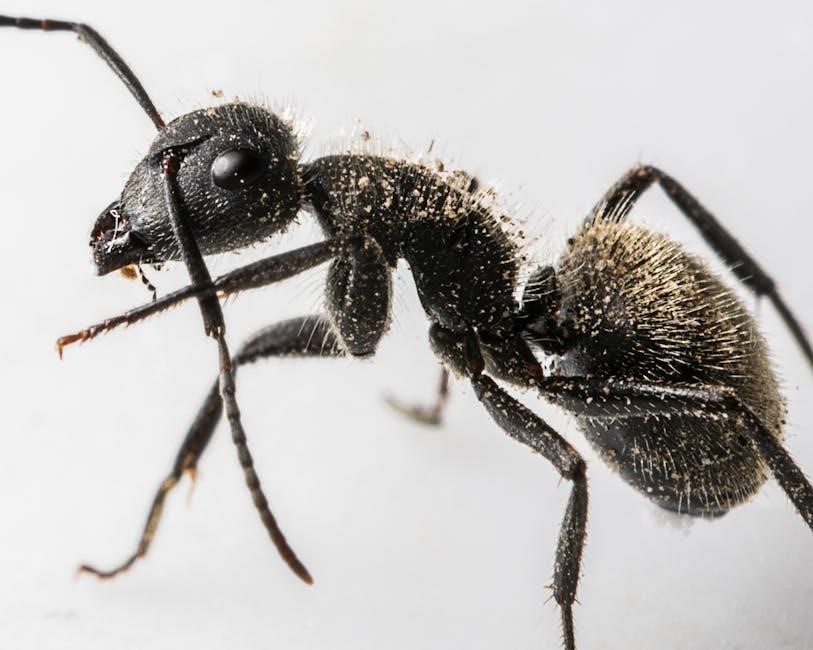
Dealing with carpenter ants often involves locating and treating the nest directly, potentially requiring professional intervention. For soil-nesting species, baits can be highly effective, encouraging ants to carry insecticide back to the colony.
Understanding foraging habits is also crucial; targeting trails with appropriate insecticides can disrupt their activity. Remember, a one-size-fits-all approach rarely works, and misapplication of products can be ineffective or even counterproductive. Accurate identification is the first, and most important, step.
Sealing Entry Points & Maintaining Cleanliness
Preventing ant infestations in Arkansas relies heavily on denying them access and eliminating food sources. Thoroughly inspect your home’s foundation, windows, and doors for cracks or openings, sealing them with caulk or weather stripping. Pay close attention to areas where pipes and wires enter the structure.
Inside, maintain a consistently clean environment. Wipe up spills immediately, store food in airtight containers, and regularly sweep or vacuum floors to remove crumbs. Don’t leave dirty dishes sitting out, and ensure garbage cans have tight-fitting lids.
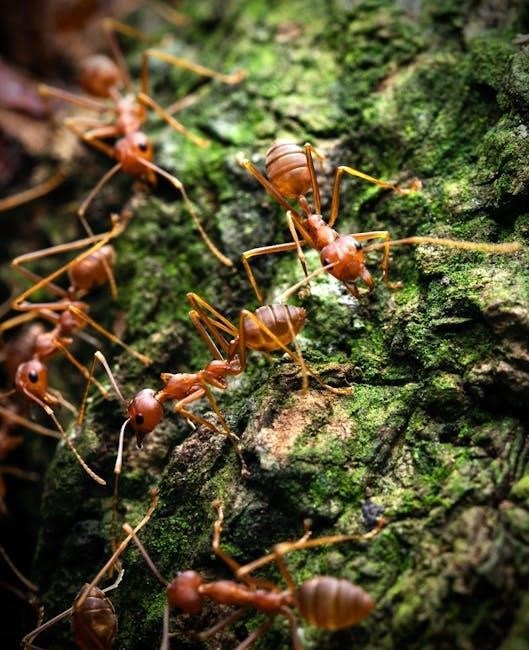
Reducing attractants significantly decreases the likelihood of ants establishing colonies within or near your home, complementing targeted control strategies.
Professional Pest Control Options
For persistent or widespread ant problems in Arkansas, professional pest control offers effective solutions. Licensed technicians can accurately identify the ant species and assess the extent of the infestation, tailoring treatment plans accordingly.
Options range from targeted insecticide applications to baiting systems designed to eliminate entire colonies. Professionals have access to products and techniques not available to the general public, ensuring safer and more efficient results.
They can also address difficult-to-reach nesting sites and provide preventative measures to minimize future infestations, offering long-term peace of mind and protecting your property.
Resources for Further Identification
Explore online keys, entomological societies, and field guides for detailed Arkansas ant identification. Experts and websites offer valuable assistance.
Online Identification Keys & Websites
Numerous online resources assist in pinpointing Arkansas ant species. Websites dedicated to pest identification often feature interactive keys, allowing users to navigate characteristics like size, color, and nesting habits to narrow down possibilities. These digital tools frequently include high-resolution images of workers, queens, and males, aiding visual comparison.
Specifically, resources detailing “Pest Ants of Arkansas” arranged alphabetically can be incredibly helpful. These sites often categorize ants by their potential as structural pests or nuisance invaders. Remember to cross-reference information from multiple sources to confirm your identification, as visual similarities can sometimes be misleading. Utilizing these online tools empowers both homeowners and professionals to accurately assess ant populations and implement appropriate control measures.
Local Entomological Societies & Experts
Connecting with local entomological societies provides access to specialized knowledge and assistance. These organizations often host workshops, field trips, and identification events, offering hands-on learning opportunities. Members frequently include professional entomologists and experienced amateur enthusiasts willing to share their expertise.
Reaching out to university extension offices within Arkansas can also connect you with local experts. These professionals can provide accurate identifications based on submitted samples or photographs, and offer tailored advice for ant control. Don’t hesitate to leverage this network of knowledge; accurate identification is the cornerstone of effective pest management, and local experts possess invaluable insights into Arkansas’s specific ant fauna.
Field Guides for Arkansas Insects
Comprehensive field guides are essential tools for ant identification, offering detailed descriptions and illustrations. While a guide solely dedicated to Arkansas ants may be limited, broader insect field guides covering the region will prove invaluable. Look for guides that emphasize visual characteristics, including size, color, and morphological features like node structure and mandible shape.
These resources often include range maps, indicating where specific species are commonly found within Arkansas. Supplementing field guides with online resources can enhance identification accuracy. Remember to cross-reference information and consider multiple sources for confirmation, ensuring a reliable identification process.